
One of the most common questions we encounter is: “Can I drink alcohol and still lose weight?” In the traditional fitness world, the answer is often a rigid “no,” framed by guilt and “no excuses” rhetoric. At Pillar, we reject that battle-worn approach. Your body is a laboratory, not a battlefield, and your social life is a variable you can—and should—account for in your experimental design. When clients ask can I drink alcohol and still lose weight, we explain that the answer lies in the data, not in restriction.
The short answer is yes. You can enjoy a drink and still see progress. However, to maintain the integrity of your weight loss experiment, you must understand how alcohol interacts with your physiology and how to apply the Synthesize pillar to manage these “intentional deviations.”
Can I Drink Alcohol and Still Lose Weight? Let’s Look at the Data
To form an effective hypothesis for your weight loss, you must understand the metabolic hierarchy. Alcohol (ethanol) provides roughly 7 calories per gram, making it more energy-dense than protein or carbohydrates. Because the body cannot store alcohol, it prioritizes the oxidation of ethanol over other fuels. This metabolic shift is the primary reason people worry and ask, “can I drink alcohol and still lose weight?”
Research indicates that alcohol consumption can acutely suppress fat oxidation (1), meaning your body temporarily stops burning body fat while it processes the drink. Furthermore, alcohol often leads to a phenomenon known as “passive overconsumption,” where drinking increases appetite and reduces dietary restraint (2). Understanding this “passive overconsumption” is key to answering can I drink alcohol and still lose weight while maintaining a calorie deficit.
This doesn’t mean you must abstain; it means you need a protocol to account for these data points so you can drink alcohol and still lose weight.
Strategy 1: The Protocol for Intentional Deviations
In the Synthesize pillar, we reframe social events involving alcohol as “Intentional Deviations.” Rather than viewing a night out as a failure, you plan for it. Balancing these social inputs is essential when asking can I drink alcohol and still lose weight.
- Bank Your Calories: If you know you will be consuming liquid energy in the evening, adjust your Nourish protocol during the day. Prioritize high-protein, high-fiber meals to ensure satiety while creating “room” in your energy balance to ensure you can drink alcohol and still lose weight.
- The “One-for-One” Rule: For every alcoholic beverage, consume 16 ounces of water. This manages hydration—a key component of the Regenerate pillar—and slows your rate of consumption.
Strategy 2: Calibrating Your Choice of Stimulus
Not all drinks are created equal in the eyes of your metabolism. When you are in a fat loss phase, the goal is to minimize unnecessary variables to ensure you can drink alcohol and still lose weight effectively.
- Avoid Liquid Sugar: Cocktails loaded with syrups and juices add significant caloric load without providing any nutritional value.
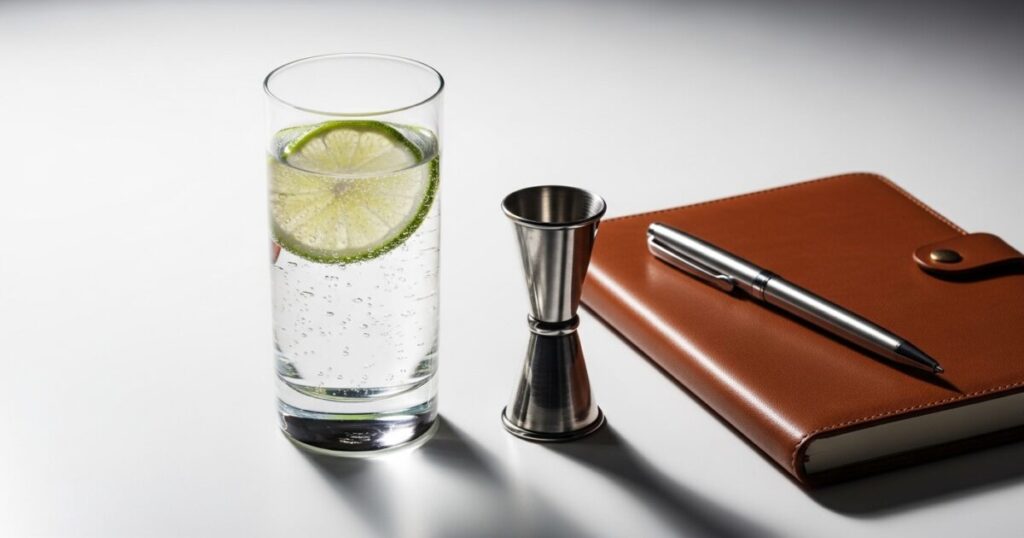
- The “Clean” Hypothesis: Opt for spirits (vodka, gin, tequila) with zero-calorie mixers like soda water and lime, or dry wines. These choices provide the social experience with the lowest impact on your daily energy balance, supporting the goal that you can drink alcohol and still lose weight.
Strategy 3: The Audit—Analyzing the Data
The Audit pillar is where you determine if your current approach is working. Alcohol affects more than just calories; it significantly impacts the Regenerate pillar by disrupting sleep quality.
If you find that your alcohol intake is consistently leading to poor sleep and reduced workout performance (3) the following day, your “Audit” might suggest that while the calories fit, the physiological cost is too high. This personal data determines if you can drink alcohol and still lose weight without compromising your long-term health.
Use your biofeedback. If a drink on Friday leads to a “null data point” in your training on Saturday, you may decide to refine your hypothesis and limit drinking to nights when you don’t have a high-intensity Stimulus planned for the next morning.
Conclusion
Can I drink alcohol and still lose weight? Absolutely. By using the Synthesize pillar to plan for social events and the Audit pillar to track the results, you turn a potential setback into a manageable variable. Remember, there are no failures in your laboratory—only data. Use these proven strategies to enjoy your life while continuing your journey toward sustainable health.
Sources
- Siler, S Q et al. “De novo lipogenesis, lipid kinetics, and whole-body lipid balances in humans after acute alcohol consumption.” The American journal of clinical nutrition vol. 70,5 (1999): 928-36.
- Yeomans, Martin R. “Alcohol, appetite and energy balance: is alcohol intake a risk factor for obesity?.” Physiology & behavior vol. 100,1 (2010): 82-9.
- Ebrahim, Irshaad O et al. “Alcohol and sleep I: effects on normal sleep.” Alcoholism, clinical and experimental research vol. 37,4 (2013): 539-49.